
Deck Railings & Stairs in Michigan: Safety, Comfort, and Design
Michigan weather is tough on decks. Snow, ice, rain, freeze-thaw cycles, your deck takes a real beating year-round. And the parts that take the most abuse, and matter most for safety, are the railings and stairs.
When people plan a new deck, they usually think about the size, the layout, the color, where the grill is going to sit, and what new furniture they’re going to buy. Railings and stairs come up later. At Visionary Builders, we build decks that hold up to real-life wear and tear. And, yes, railings and stairs aren’t the “sexiest” part of planning out how your deck looks, but those are the parts that decide how safe and comfortable your deck actually feels, especially in February.
Designing Safe Deck Stairs for Michigan Winters
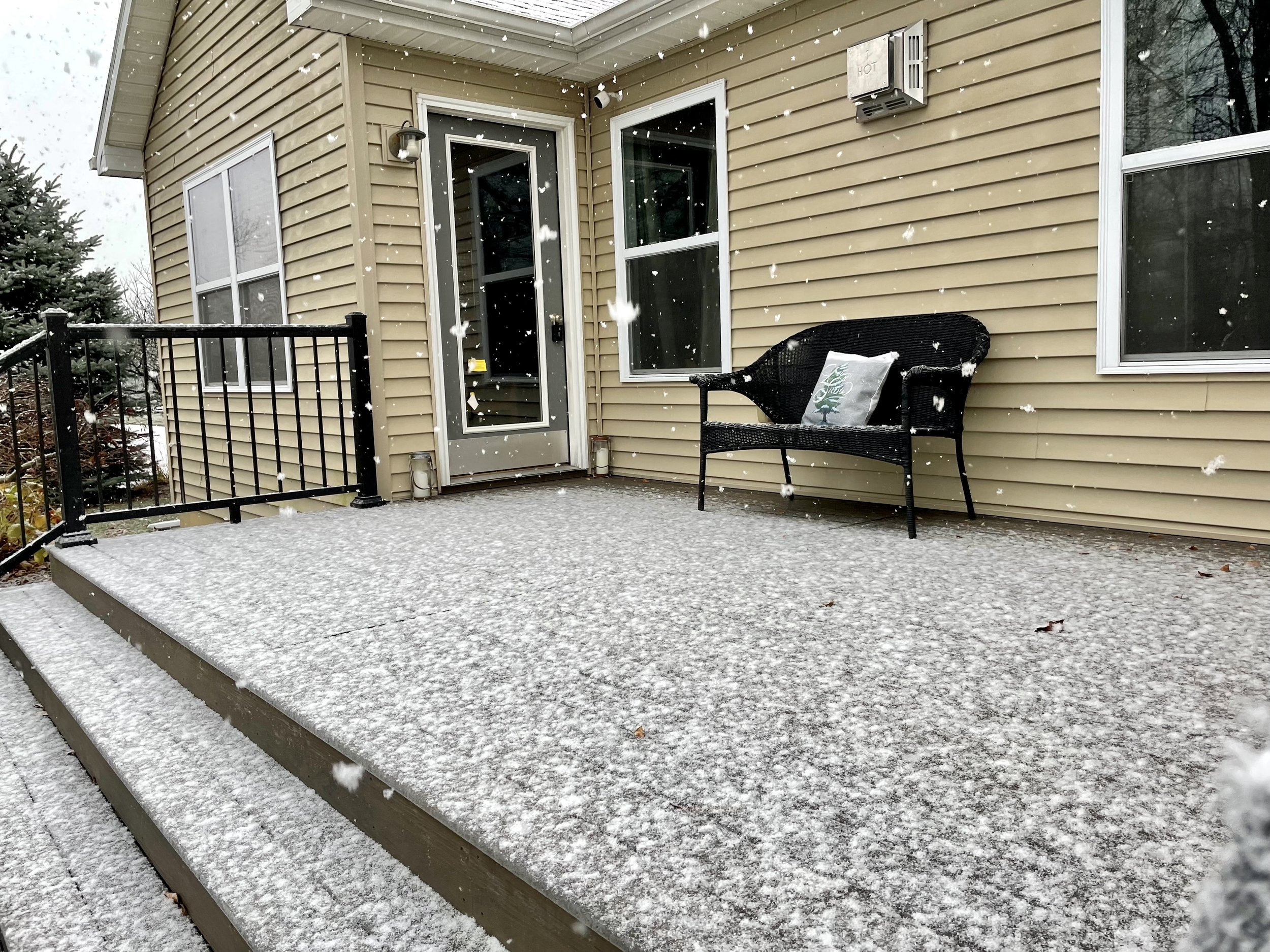
Deck stairs are the highest-risk area of your deck once snow and ice show up. The safety of your deck stairs starts with proportions and details that prevent missteps.
What we focus on:
Consistent rise and run, so no one misjudges a step
Slight pitch on treads for drainage, meltwater shouldn't sit and freeze
Wider treads for better footing in winter boots
Solid, graspable handrails that work with gloves on
Materials that don't turn slick when temperatures drop
Ensuring water from pools and sprinklers don’t create a slip-n-slide during the summer months
Traction belongs in the design from day one. Textured composite decking, anti-slip strips, grit additives in sealers, secured outdoor mats, there are real options. Don't treat it as something to figure out later.
Railing Height, Spacing, and Code
Building codes exist for a reason, especially in a climate like ours. Residential deck railings in Michigan typically need to be at least 36 inches tall and not allow a 4-inch sphere to pass through. Stairs with four or more risers usually require a continuous handrail.
We always build to code, but more importantly, we build for real-world use. Code is the minimum, not the goal. Families with kids, older adults, or anyone moving between the deck and a backyard pole barn or workshop benefit from going beyond the minimum.
Lighting That Actually Works
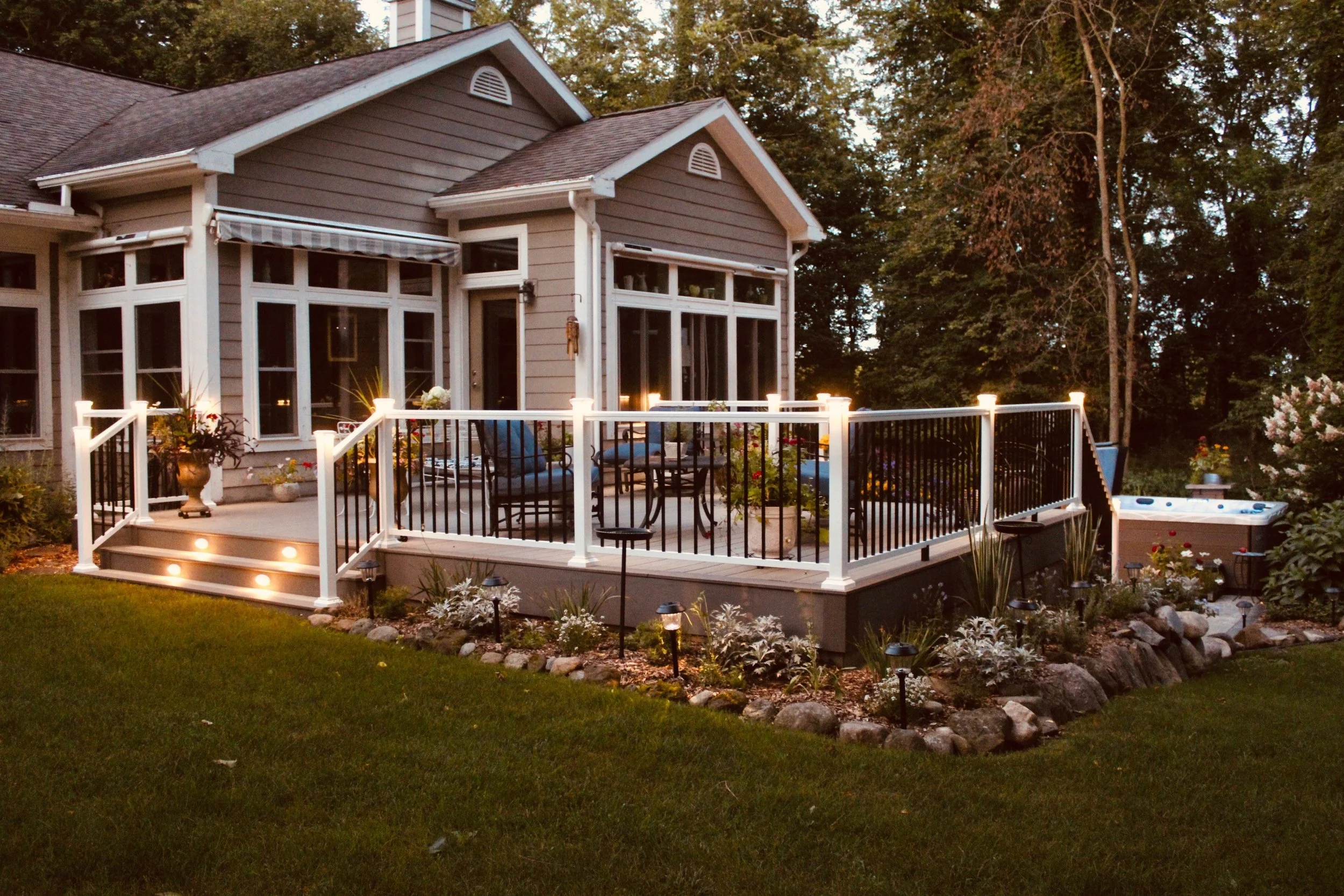
Michigan daylight is short in winter. By 5 PM, you're walking out to your truck or pole barn in the dark. Good lighting is one of the simplest ways to make your deck more comfortable and safer.
What we recommend:
Low-voltage LED lighting built into stair risers
Post cap lights along the railing for steady visibility
Downward-facing lights to highlight steps without glare
Strategic placement at the top and bottom of every stair run
The result is a deck you actually use past Labor Day.
Designing Around How You Use the Space
This is where most builders miss the mark. Deck design should match how you live, not just how it looks on paper.
A few examples:
Families with kids need tighter baluster spacing and secure handrails
Entertaining spaces benefit from wider stairs and multiple access points
If your deck connects to a pole barn, garage, or backyard workspace, traffic patterns matter
Year-round use means lighting and traction built in from day one
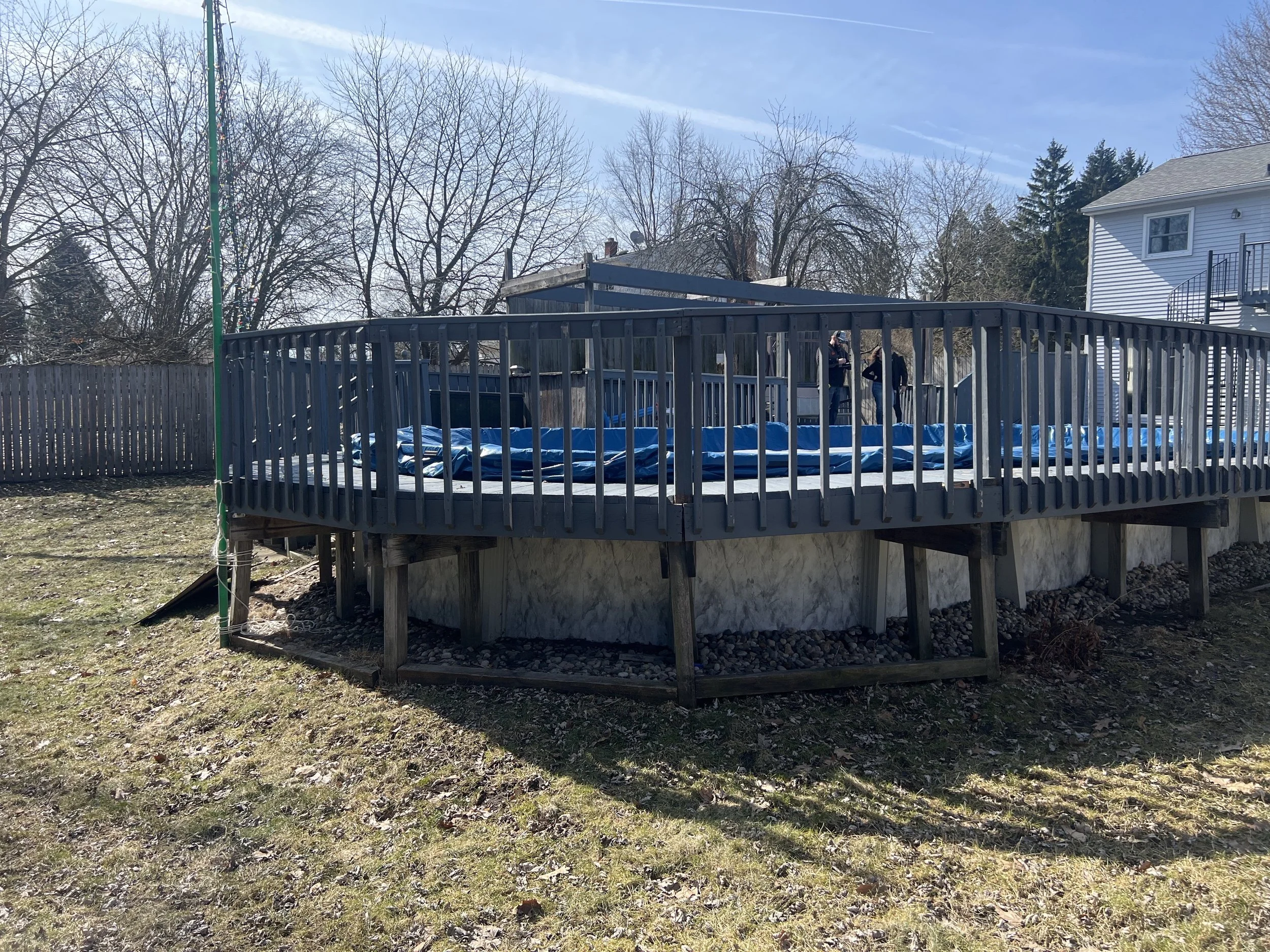
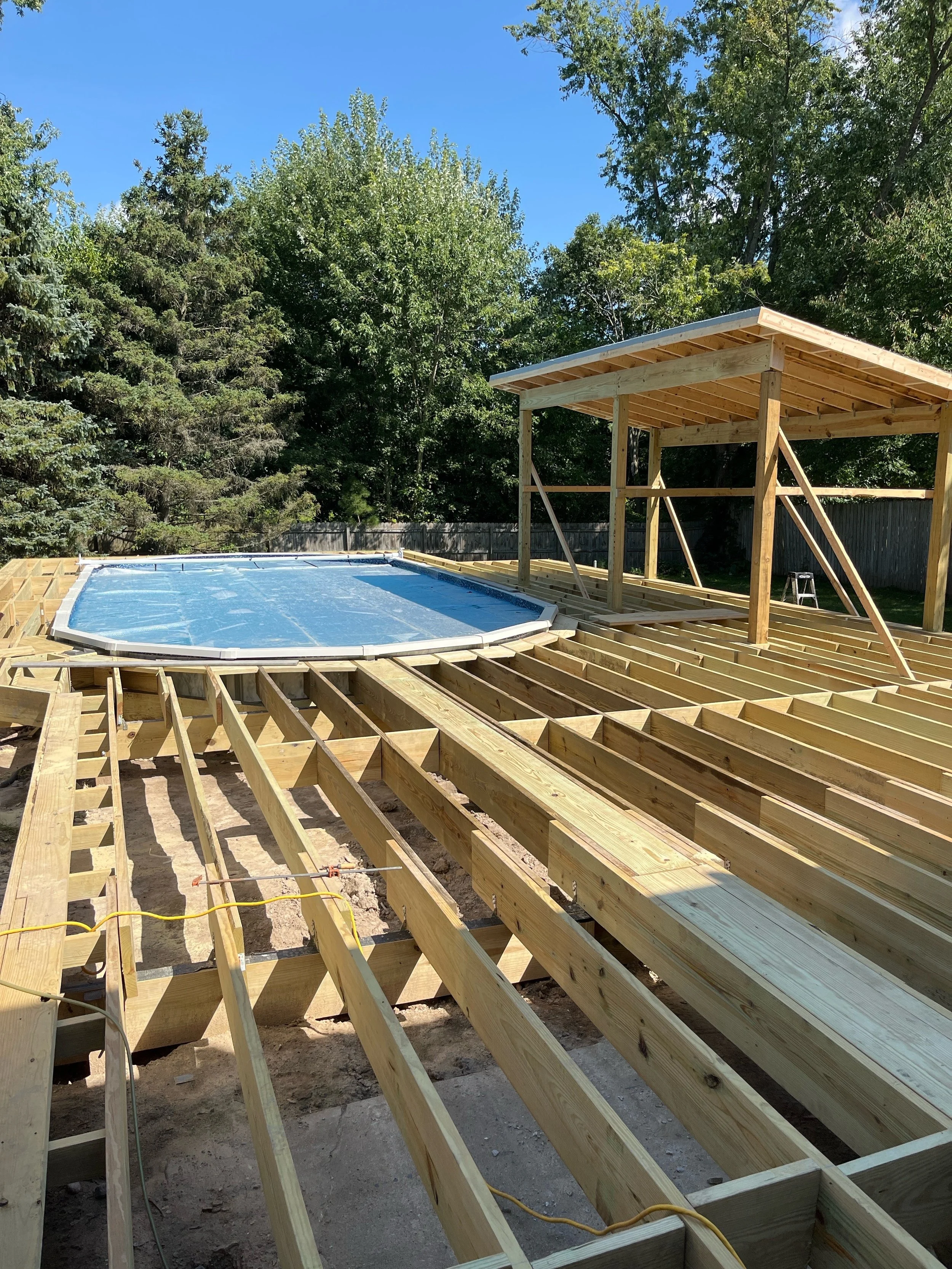
Many of our customers in Eaton Rapids, Lansing, and the surrounding Mid-Michigan area have decks that connect to a custom pole barn or garage. Others have a deck that leads from the house to a yard or pool area. How you move between those spaces matters. We design around movement and behavior, not just layout.
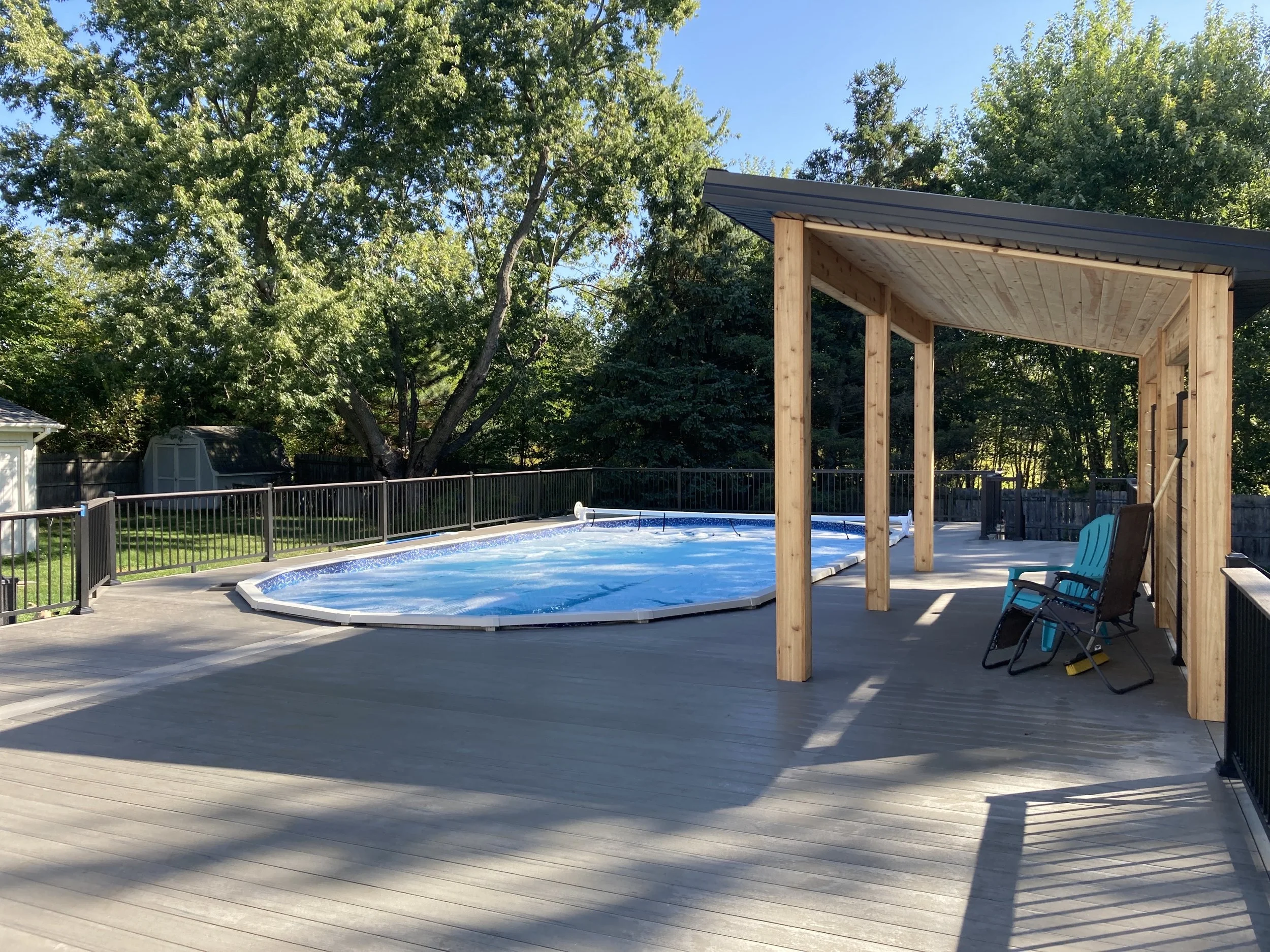
Choosing Deck Railings for Michigan
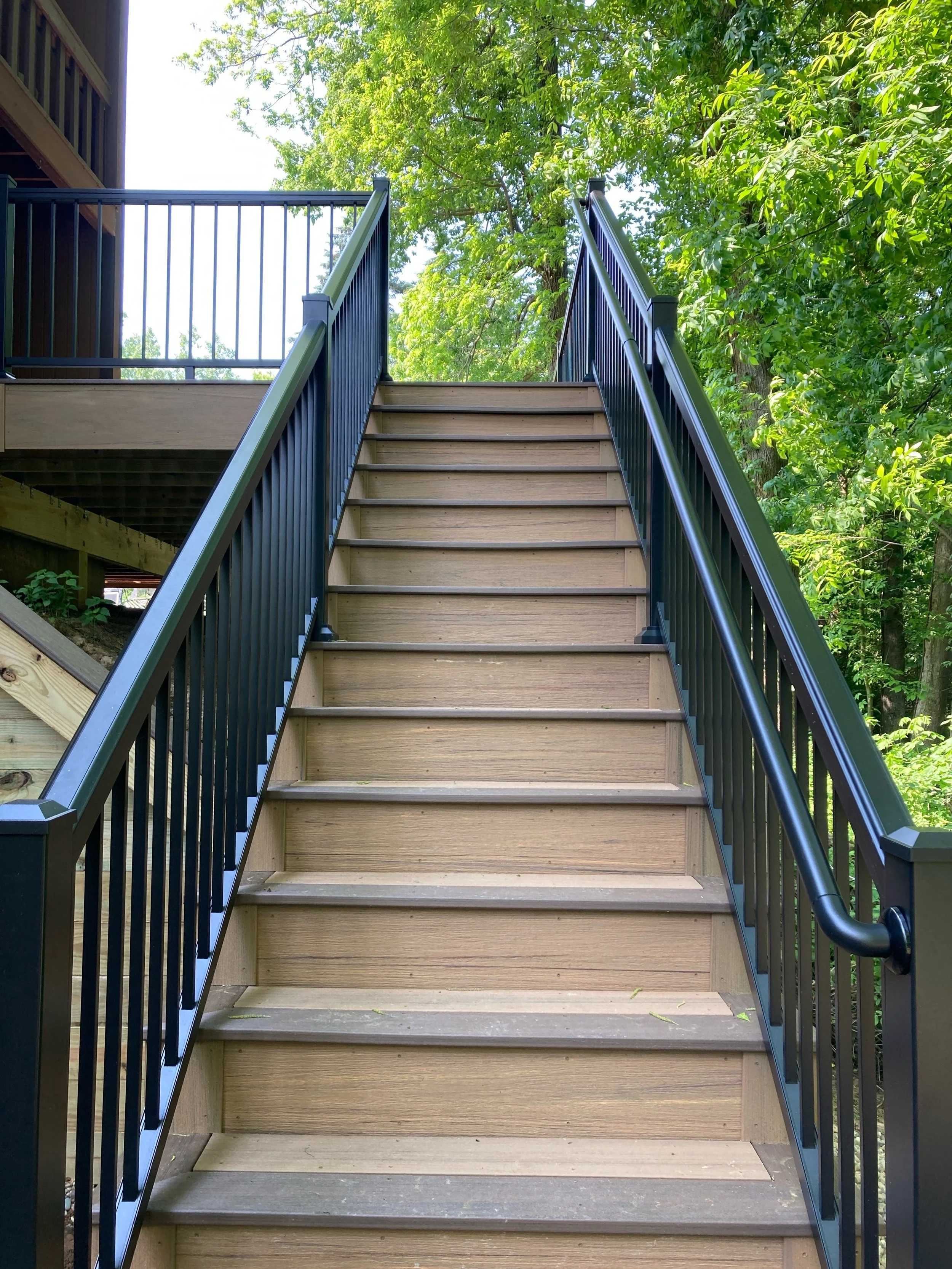
Material choice matters more than most homeowners realize. Deck railings in Michigan have to handle moisture, drastic temperature swings, and long winters without falling apart or looking rough after a few seasons.
The materials we recommend most often:
Powder-coated aluminum: Doesn't rust, handles moisture, minimal maintenance
Composite railing systems: Resists rot and doesn’t absorb water like wood
Pressure-treated wood (properly sealed): A solid option when maintained
Cable rail with aluminum posts: Clean modern look, works well when tensioned correctly
Anything that absorbs water will struggle in Michigan and require hefty maintenance. We help homeowners choose materials that resist deterioration and stay looking good for years.
Style That Doesn't Compromise Safety
You don't have to sacrifice style to get a safe railing system. We work with homeowners to balance both, usually by combining materials, such as aluminum framing with composite accents, or by color-matching posts to a home or a custom pole barn on the same property.
The best designs look good and still perform well under less-than-ideal conditions.
Common Mistakes to Avoid Before You Build
The biggest issues come from focusing too much on appearance and not enough on function.
What we see most often:
Choosing materials that get slippery when wet or icy
Skipping lighting or underestimating how dark winter evenings get
Narrow, steep, or uneven stairs that become dangerous in snow
Ignoring drainage, which leads to ice buildup
Treating railings as decorative instead of safety-critical
Get these right upfront and your deck will work the way you want it to, for decades, not just the first summer.
Ready to Build a Deck That Holds Up Year-Round?
We've been designing and building decks, pole barns, and exterior projects for homeowners across Eaton Rapids and Mid-Michigan since 2017. Licensed, insured, and family-owned, we treat your home like it's our own.
Ready to get started? Give us a call at (517) 939-1009 for a free estimate. We are here to help.
Frequently Asked Questions
-
Composite and metal railings tend to perform best because they resist moisture, do not warp, and require less upkeep compared to traditional wood.
-
Focus on proper stair dimensions, add traction strips or textured surfaces, and install lighting to improve visibility during snowy and icy conditions.
-
Yes. Building codes regulate railing height, spacing, and stair design. Following these ensures safety and avoids issues during inspections.
-
No, but we highly recommend adding lighting. Lighting improves safety, especially in winter when daylight is limited. It also makes the space more usable year-round.
-
Right from the start. Early planning helps avoid design issues and ensures everything works together seamlessly.