
Roof Ventilation & Insulation in Michigan: Preventing Ice Dams
If you've dealt with ice dams in a Michigan winter, you already know they're more than just a frozen mess on the edge of your roof. They're a sign that something inside your home isn't working the way it should. And most of the time, the real problem isn't your shingles. It's what's going on up in the attic.
Ice dams come down to two things working together: roof ventilation and insulation. When those are out of balance, you'll see the same headache every winter.
Why Ice Dams Happen on Michigan Roofs
In a healthy home, your roof should stay cold during the winter. That sounds backward, but it's exactly what keeps ice dams from forming.
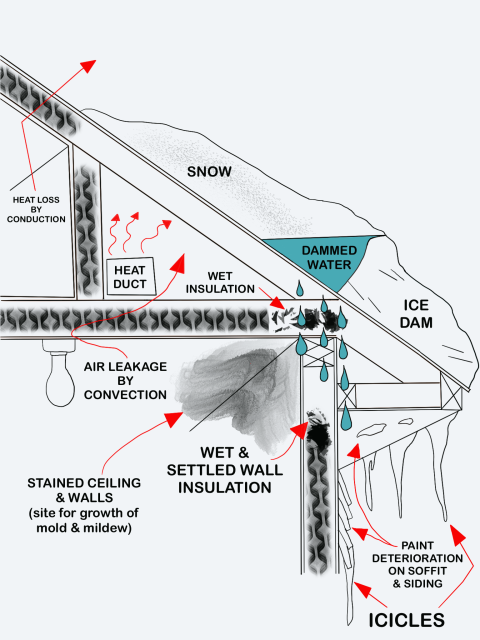
Photo Credit: Malarkey Roofing Products
When insulation is uneven or air is leaking out of your living space, heat sneaks up into the attic. That heat warms the roof deck, and snow on top of your roof starts melting, even when it's well below freezing outside. The water runs down to the colder edges, usually near the eaves, and freezes again. That ice builds up over time and starts pushing water back under your shingles.
Michigan makes this worse. We sit in that stretch of the country where temperatures swing above and below freezing all winter long. Snow melts during the day, refreezes at night, and the cycle just keeps feeding itself.
What Roof Ventilation Actually Does
Many homeowners think ventilation is about heating or cooling the attic. It's not. Myth busted.
The job of roof ventilation is to keep air moving so the temperature of your roof stays steady from one end to the other. A balanced system pulls cool outside air in through the soffit vents along the bottom of the roof, and pushes warm air out through ridge vents at the top. That steady airflow keeps warm pockets from forming under the deck.
When soffits are blocked, missing, or just plain undersized, the warm air has nowhere to go. It sits there. Snow melts. Ice forms. Same problem, every year.
PHOTO CREDIT: Malarkey Roofing Products
The Role of Insulation in Ice Dam Prevention
Insulation is your first line of defense. It keeps the heat from your living space where it belongs, inside the rooms you actually use.
When attic insulation is properly installed and evenly spread, less heat reaches the roof deck. Less heat means less melting. Less melting means no ice dams.
But insulation alone isn't enough. If warm, moist air is leaking around recessed lights, attic hatches, wiring, or framing, you'll still have a problem. That's where air sealing comes in. Sealing those gaps stops both heat and moisture from sneaking into the attic in the first place.
What's Happening Inside Your Attic
Most of the real damage from ice dams happens where you can't see it.
Warm, moist air rises into a cold attic and condenses on the underside of the roof deck. Over time, that can lead to damp insulation, mold, and even rotted framing. So while the icicles outside grab your attention, the bigger issue is usually what's quietly building up above your ceiling.
That's the part that costs homeowners the most when it's left alone.
Homes That Tend to Have More Trouble
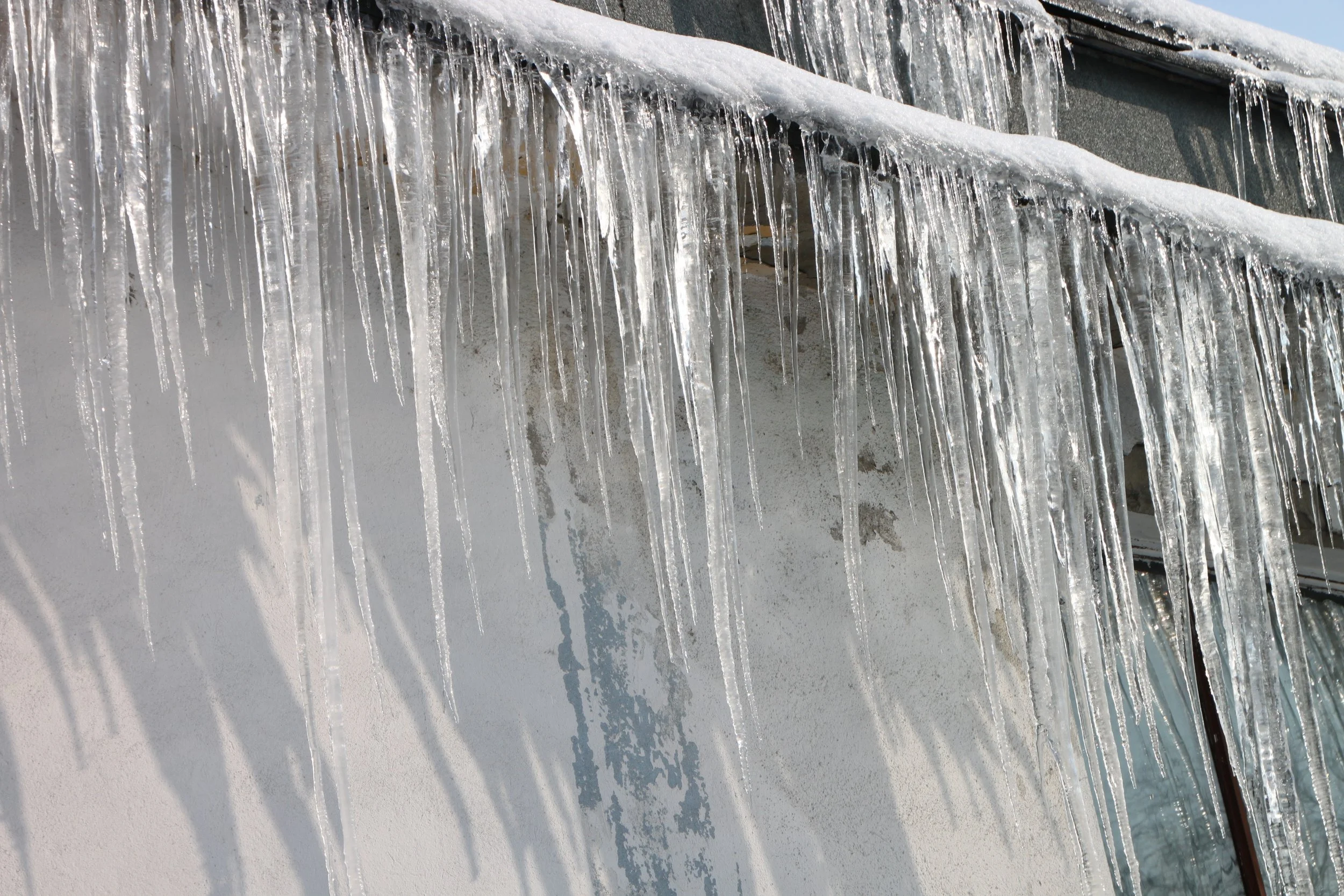
Photo Credit: Emilian Robert Vicol
Some homes in Mid-Michigan are just more prone to ice dams than others:
Older homes where the original insulation has settled or thinned out
Complex rooflines with valleys, dormers, or multiple peaks
Long overhangs where the eaves stay extra cold
Finished attics or upstairs bonus rooms with limited airflow
Pole barns converted into living space without the right insulation and venting
That last one comes up a lot. We see pole barns being turned into shops, offices, and even full living spaces. They're great buildings, but when they're converted without addressing insulation and airflow properly, ice dams and condensation aren't far behind. A pole barn isn't framed like a house, and it can't be insulated like one either.
Why a Whole-System Approach Matters
Ice dams aren't caused by one thing, and they aren't solved with one product.
A healthy roof system needs:
Insulation that controls the temperature inside your home
Roof ventilation that keeps airflow steady across the whole roof
Air sealing that stops heat and moisture leaks
Roofing materials that actually shed water
Gutters that move water away from the foundation
If one piece is off, the whole system struggles. You can throw heat cables on the edge of your roof, but you're treating a symptom. The cause is still up there.
A Real Mid-Michigan Example
We worked on a home on the outskirts of Eaton Rapids that had been dealing with ice dams every winter. Water had started backing up under the shingles and into the walls.
The shingles weren't the issue. The insulation was uneven, the soffit vents were partially blocked, and warm air from the home was leaking right into the attic.
Our team reworked the insulation, improved airflow with proper soffit and ridge venting, and air-sealed the attic to reduce heat loss. The next winter, no ice dams. The home was more comfortable too, lower bills, a drier attic, and no more water stains on the ceiling.
That's what happens when the system gets back into balance.
The Bottom Line
Preventing ice dams in Michigan comes down to balance. A cold, dry attic. Heat staying inside the rooms it's supposed to. Steady airflow across the roof.
When those three things are working together, your roof does its job and you stop seeing the same problem every January.
If your home keeps icing up at the edges every winter, something behind the scenes needs attention. We handle the whole exterior, roofing, siding, windows, decks, and pole barns, and we look at all of them as one system, not a list of separate parts. That's how we get problems like this fixed for good.
Give us a call at (517) 939-1009 for a free estimate. No pressure, no hassle.
Frequently Asked Questions
-
The main cause is heat escaping into the attic from poor insulation and air leaks, combined with not enough roof ventilation. That heat warms the roof deck, melts snow, and lets the water refreeze along the colder edges of your roof.
-
Not usually. Adding insulation helps, but if your ventilation and air sealing aren't addressed, you'll still have warm spots up there. The three pieces work together.
-
They can manage the symptom, but they don't fix the cause. We treat them as a backup, not a real solution.
-
Common signs are frost on the underside of the roof deck, damp or matted insulation, mold, stale air, and ice building up evenly along the entire roof edge.
-
Yes, especially when they're converted into conditioned space. Pole barns have different framing and roof systems than a typical home, and they need an insulation and airflow plan built for that structure.
-
Watch for water stains on ceilings or walls, peeling paint near the eaves, a musty smell in the attic, or shingles that look lifted at the edges. If you're seeing any of those, it's worth a closer look.